

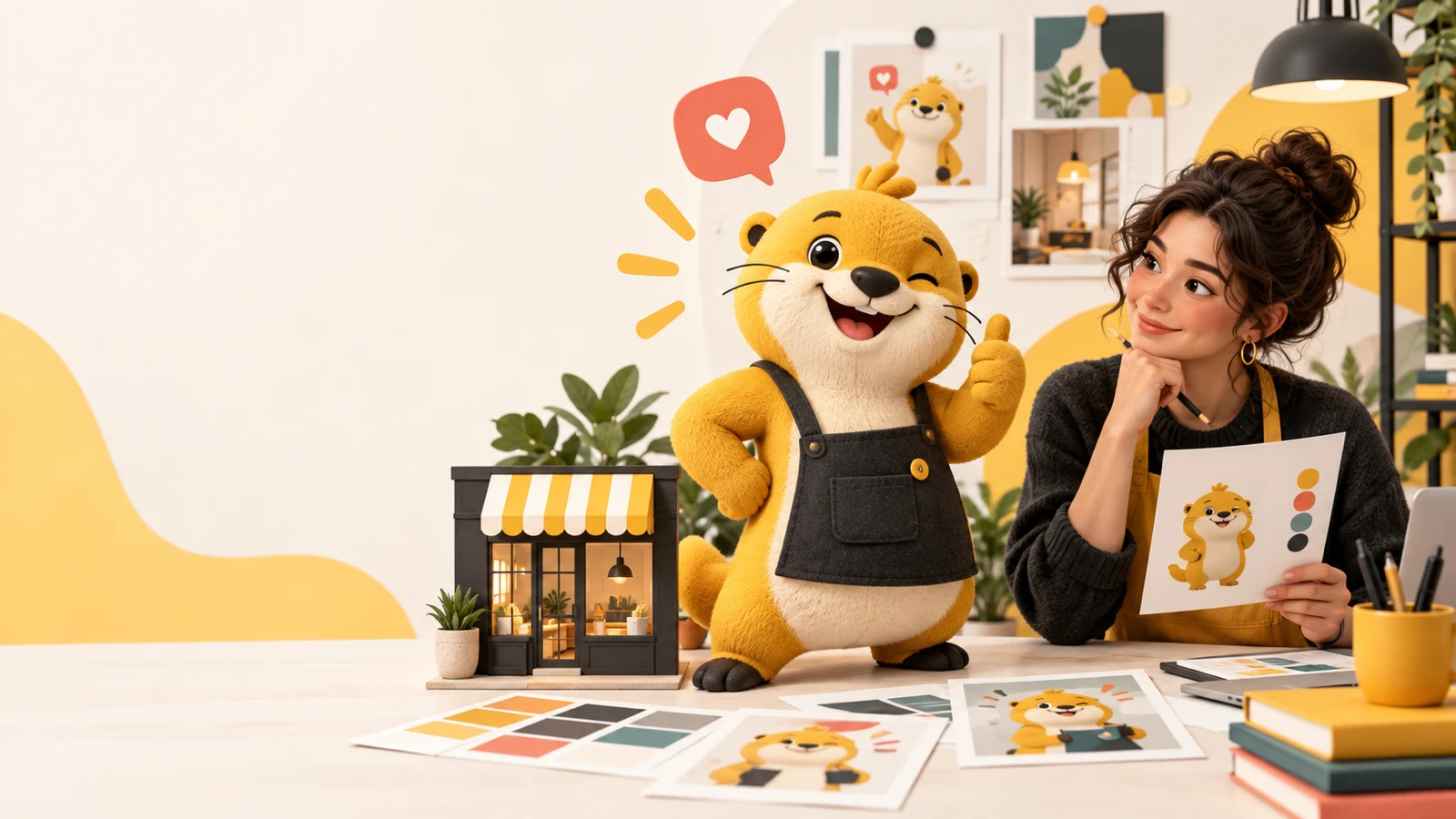
Mascots are back — and not in the stiff, corporate-mascot way you might remember. Duolingo's owl mock-threatens users who skip their lessons. Crocs built a six-foot animatronic-style crocodile named Niles and put him in his own sitcom. Liberty Mutual turned an actor's on-air mispronunciation into a fuzzy yellow character called Liberty Biberty. These aren't cheap gimmicks; they're deliberate brand strategy, and it's working.
For a small business owner, the natural question is: should I have one of these too? The honest answer is sometimes — and it depends entirely on what a mascot is actually doing for the brands that are winning with them right now.
Why Mascots Are Having a Moment
The current wave of mascot branding isn't about a friendly logo sidekick sitting quietly on packaging. It's about giving a brand a character that can behave like a person online — with opinions, humour and a personality distinct from the corporate voice behind it.
Duolingo's owl works because it does things a company account never could: it "flirts," it crashes other brands' posts, it leans into being unhinged. That's precisely what makes it shareable. A logo can't do a bit. A character can.
The Real Job a Mascot Does
Strip away the humour and every one of these examples is solving the same problem: making a brand feel less like an institution and more like a personality people want to interact with. That's valuable because:
- It gives you a face for content. A mascot can appear in social posts, emails and ads in ways a static logo can't — reacting to trends, seasons or customer moments.
- It's memorable in a crowded market. A distinct character is easier to recall and describe ("the owl app") than a wordmark alone.
- It survives rebrands and product changes. Characters can flex and evolve tone over years without the business needing a full identity overhaul.
Where Small Businesses Get This Wrong
The failure mode isn't having a mascot — it's treating the mascot as decoration instead of a communication tool. A clip-art animal bolted onto a logo, with no personality, voice or content plan behind it, does none of the work the examples above are doing. It just adds visual clutter.
A mascot is a commitment. Someone on your team needs to know how it "talks," what it would and wouldn't say, and where it shows up. If nobody can answer that, you don't have a mascot — you have an illustration.
When a Mascot Makes Sense for Your Brand
- You're consumer-facing and social-first. Mascots earn their keep in feeds, not on B2B invoices.
- Your category is dry or commoditised. Insurance, language learning and footwear are all categories where a character adds warmth that the product itself doesn't provide.
- You can commit to using it consistently. A mascot that appears once and disappears never builds recognition.
If none of that describes your business, a strong wordmark or symbol — built well — will do more for your brand than a mascot ever could.
How to Do It Without Overspending
You don't need an animatronic costume or a sitcom to get the benefit of a mascot. A well-designed character mark — simple enough to work as a small icon, distinct enough to recognise instantly, and flexible enough to express a couple of moods — covers most small businesses' needs. Start simple. You can always give it more personality once it's proven it earns attention.
Thinking about a character mark for your brand?
Our designers can build a mascot or character logo that's distinctive, scalable and genuinely yours — not clip art. Packages start from $29 with a 100% Money Back Guarantee.
See Packages